Blog

  • Litre, Cheque, Louvre and Other British Spellings Explained

    Litre, Cheque, Louvre and Other British Spellings Explained

    Litre is the British spelling of liter, the metric unit of volume equal to one cubic decimetre, or 1,000 cubic centimetres. Both spellings name the same unit and are pronounced the same way. The United States writes liter, while the UK, Canada, Australia and most other English-speaking countries write litre. Cheque and louvre follow the same pattern: British and Commonwealth forms of the American check and louver.

    Last checked: October 29, 2026

    What does litre mean?

    Wordlitre
    Part of speechNoun
    SaysLEE-tuh (UK), LEE-ter (US)
    First used1797, from French

    A litre is a metric unit of volume equal to the space inside a cube that measures 10 centimetres on each side.

    That cube is the cubic decimetre. Every litre holds exactly 1,000 millilitres or 0.001 cubic metres. The litre is not one of the seven SI base units. It is a non-SI unit officially accepted for use alongside the SI system, which is why you see it on milk cartons, fuel pumps and engine specifications around the world.

    In IPA, British speakers say /ˈliːtə/ and American speakers say /ˈliːtər/. The only difference is the r sound, and that comes from accent, not spelling. A Canadian who writes litre still pronounces the final r.

    Here’s how the word turns up in everyday British and Commonwealth English:

    • “Petrol has gone up another four pence a litre since last week.”
    • “Grab a two-litre bottle of lemonade for the party.”
    • “The new hatchback has a 1.5-litre engine and still feels quick.”
    • “You should drink a couple of litres of water on a hot hike.”

    Notice the hyphen in “two-litre bottle” and “1.5-litre engine”. When the number and unit work together as an adjective before a noun, the hyphen keeps the phrase readable.

    Litre or liter: which spelling is used where

    Neither spelling is wrong. Each one is correct in its own variety of English, and the real mistake is mixing them in a single document. Use the spelling your readers expect.

    Country or body Spelling Notes
    United Kingdom litre Fuel, drinks and food labelling all use litre
    Ireland litre Follows British spelling
    Canada litre Canada follows British spelling for metric units even though it uses many American spellings elsewhere
    Australia litre Standard in government and media style
    New Zealand litre Standard
    South Africa litre Standard
    India litre British-influenced spelling
    United States liter Used by NIST, the US standards body
    BIPM (international SI brochure, English text) litre The international standards body uses the -re form

    The Canada row surprises people. Canadian English often borrows from both sides of the Atlantic, so you’ll see Canadians write “color” in some contexts but almost always “litre” and “metre”. Fuel at Canadian gas stations is priced per litre, and the spelling on the pump matches.

    Usage tip

    Pick one spelling system per document and stick to it. If you write litre, also write metre, centre and colour. Readers notice a “liter” sitting next to a “colour” faster than you might expect.

    Where the word litre comes from

    Litre Unit Visualisation

    The litre was born during the French Revolution, when France threw out a tangle of regional measures and built the metric system from scratch. French lawmakers introduced the litre in the 1790s as part of that new system.

    They didn’t invent the name from nothing. Litre was adapted from litron, an older French measure of capacity for dry goods such as grain and salt. Litron goes back through Medieval Latin litra to the Greek litra, which was a Sicilian unit of weight and also the name of a coin.

    English borrowed the word from French in 1797, according to standard etymological dictionaries. For its first decades in English it was spelled litre, the French way, on both sides of the Atlantic.

    The split came later. Noah Webster, the American lexicographer, pushed for spellings that matched pronunciation more closely. His 1806 Compendious Dictionary of the English Language and his 1828 American Dictionary of the English Language promoted forms such as center and theater. Over the 19th century the -er pattern spread through American printing, and liter, meter and caliber followed. British English kept the French-derived -re endings.

    How the definition has changed

    The litre hasn’t always meant exactly one cubic decimetre.

    1. 1901: The General Conference on Weights and Measures (CGPM) redefined the litre as the volume of 1 kilogram of pure water at its maximum density. That made it slightly bigger than a cubic decimetre, by about 28 parts per million.
    2. 1964: The CGPM dropped the water-based definition and declared the litre a special name for the cubic decimetre. That’s the definition still in force.
    3. 1979: The CGPM approved a capital L as an alternative symbol alongside the lowercase l.

    The tiny 1901 discrepancy mattered to scientists working with precise volumes, which is why the 1964 reset tied the unit back to a clean cubic measurement.

    L or l: which symbol should you use?

    Both are officially correct. The capital L was approved because a lowercase l is easy to misread as the numeral 1, especially in typefaces where the two look nearly identical. Compare “1 l” with “1 L” and the problem is obvious.

    In the US, NIST recommends the capital L. Across Europe and the UK you’ll see both, and lowercase is still common on product labels, as in “500 ml”. The curly script ℓ that some people learned at school is not an official symbol, so avoid it in formal or technical writing.

    How big is a litre? Conversions that matter

    If you need a mental picture, a litre is roughly the size of a large carton of milk or juice. A standard UK wine bottle holds 75 centilitres, so a litre is a bit more than one bottle.

    1 litre equals Amount
    Millilitres 1,000 mL
    Cubic centimetres 1,000 cm³
    Cubic inches 61.02 in³
    US fluid ounces 33.81 fl oz
    Imperial (UK) fluid ounces 35.20 fl oz
    US liquid pints 2.11 pints
    Imperial pints 1.76 pints
    US liquid quarts 1.06 quarts
    US gallons 0.264 gallons
    Imperial gallons 0.220 gallons

    The US and imperial figures don’t match because the two systems define their ounces, pints and gallons differently. A US gallon is 3.785 litres, while an imperial gallon is 4.546 litres. A US fluid ounce is about 29.57 mL and an imperial fluid ounce is about 28.41 mL. When a recipe or a fuel-economy figure comes from the other side of the Atlantic, check which system it uses before you convert.

    The litre family

    Metric prefixes attach to litre just as they do to metre and gram. Some of these units are everyday words; others turn up only in specific trades.

    Unit Symbol Equal to Where you’ll see it
    Millilitre mL or ml 0.001 L Medicine doses, cosmetics, drinks cans
    Centilitre cL or cl 0.01 L Spirits and wine bottles in the UK and EU (70 cl, 75 cl)
    Decilitre dL or dl 0.1 L Some European recipes; blood test results such as g/dL
    Litre L or l 1 L Fuel, bottled drinks, engine size
    Hectolitre hL or hl 100 L Wine and beer production figures

    In British spelling every one of these keeps the -re: millilitre, centilitre, decilitre, hectolitre. American spelling switches them all to -er.

    Why British English keeps the -re ending

    Litre Spelling by Country Table

    Litre belongs to a group of words that came into English from French and kept their French spelling in Britain. American English switched most of them to -er.

    British spelling American spelling Meaning
    litre liter Unit of volume
    metre meter Unit of length
    centre center Middle point
    theatre theater Venue or art form
    fibre fiber Thread or dietary material
    calibre caliber Quality, or a gun’s bore size
    sombre somber Dark or serious
    spectre specter Ghost or looming threat
    lustre luster Soft shine
    sabre saber Curved sword
    meagre meager Scanty

    There are exceptions on the American side. Acre, massacre, mediocre and ogre keep the -re ending in the US as well. Switching them to -er would put the e after the c or g and suggest a soft sound, so “acer” might be read as “ay-ser”. The -re spelling protects the hard consonant.

    Theatre is a half exception. Plenty of American venues put “Theatre” in their names because it looks more traditional, so you’ll find both spellings on the same American street.

    Often confused with

    In British English, a metre is the unit of length and a meter is a measuring device, such as a gas meter or parking meter. American English uses meter for both, but British writers keep them separate.

    There’s no matching trap for litre. No device called a “liter” exists in British English, so liter in a British text is simply the American spelling. Do watch for one common slip: litter (rubbish, or a group of puppies) is a different word, and a spellchecker won’t always catch it.

    Cheque: the British word for a bank check

    Wordcheque
    Part of speechNoun
    SaysCHEK
    First used18th century

    A cheque is a written order telling a bank to pay a stated sum from the writer’s account to a named person or organisation.

    In the US, this is a check. In the UK, Ireland, Canada, Australia, New Zealand and India, it’s a cheque. The pronunciation is identical, and that’s the main thing to remember.

    British English only uses cheque for the banking sense. Every other meaning of check stays the same:

    • “Can you check the spelling before we print?” (verb, to verify)
    • “She paid the deposit by cheque.” (banking)
    • “I’ll do a quick check of the tyres.” (noun, an inspection)
    • “That’s check, and nearly checkmate.” (chess)

    The banking word grew out of check in the sense of a counterfoil or a means of control, which itself traces back to the chess term. The chess word came into English through Old French eschec, ultimately from the Persian shāh, meaning king. The distinctive British spelling cheque appeared in the 18th century and is generally thought to have been influenced by exchequer, the old name for the royal treasury.

    Cheques have become far less common in Britain, but they haven’t disappeared. The UK’s Payments Council once set a target of 2018 for winding down the cheque clearing system. After pushback from charities, older people’s groups and small businesses, it abandoned the plan in July 2011. British households and firms still write cheques, just much less often than they used to.

    Compounds keep the spelling too: chequebook, cheque card, traveller’s cheque. One related word causes doubt. Chequered, meaning patterned in squares or having a mixed history (“a chequered past”), is British; Americans write checkered.

    Louvre and louvres: slats, vents and the museum

    Wordlouvre
    Part of speechNoun
    SaysLOO-vuh (UK), LOO-ver (US)
    American formlouver

    A louvre is one of a set of angled, parallel slats fitted in a door, window, shutter or vent so that air and some light can pass through while rain and direct sunlight are kept out.

    The plural is louvres, and the adjective is louvred, as in louvred doors or louvred shutters. American English writes louver, louvers and louvered.

    Some examples:

    • “The wardrobe has louvred doors so your clothes don’t get musty.”
    • “Angle the louvres down to stop the afternoon glare.”
    • “The car’s bonnet has louvres to let engine heat escape.”
    • “We fitted an aluminium louvre roof over the patio.”

    The word has a long history in English. In medieval buildings, a louvre was a turret or opening on a roof that let smoke out from a central hearth, often fitted with slanted boards to keep rain away. English took the word from Old French in the Middle Ages. Its origin before Old French is uncertain; etymologists have proposed several sources, but none is settled.

    The Musée du Louvre in Paris shares the spelling, but the name of the palace has its own disputed origin. No proven link exists between the museum’s name and the architectural louvre, so be careful with explanations online that connect the two with confidence.

    Other British spellings that trip people up

    Litre, cheque and louvre are only a small part of the ins and outs of British spelling. These pairs cause the most trouble in real writing:

    • colour / color, flavour / flavor, honour / honor: British English keeps the -our ending.
    • programme / program: Britain uses programme for a TV show or a schedule of events, but program for computer software.
    • tyre / tire: In Britain, tyre is the rubber on a wheel and tire is only the verb meaning to grow weary.
    • kerb / curb: Kerb is the edge of a pavement; curb is the verb meaning to restrain.
    • storey / story: A storey is a floor of a building; a story is a tale.
    • licence / license: British English uses licence for the noun and license for the verb. Practice and practise split the same way.
    • aluminium / aluminum: This difference is in the word itself as well as its spelling. Britain adds the extra syllable.
    • grey / gray: Grey is standard in Britain and gray in the US.
    • travelled / traveled: British English doubles the l before -ed and -ing in words like travel, cancel and label.

    One point surprises many readers: -ize is not purely American. Oxford University Press, among others, uses organize and realize in British texts. That house style is known as Oxford spelling. Most British newspapers and many publishers prefer -ise, but both endings are acceptable in British English as long as you’re consistent.

    Usage tip

    Set your spellchecker to the right variety of English before you start writing. “English (UK)” will flag liter, check (for banking) and louver, while “English (US)” will flag litre, cheque and louvre.

    FAQ

    Is it spelled liter or litre?

    Both are correct. Liter is the American spelling, and litre is the spelling used in the UK, Canada, Australia, New Zealand, Ireland, South Africa and India. Use whichever matches the rest of your writing.

    How much is 1 liter in ounces?

    One litre equals about 33.81 US fluid ounces or about 35.20 imperial fluid ounces. The numbers differ because US and imperial ounces are slightly different sizes. If a recipe comes from the US, use 33.8.

    Is it liter or litre in Canada?

    Canada uses litre. Canadian English follows British spelling for metric units, so you’ll see litre, millilitre and metre on product labels, fuel pumps and government material.

    What does 1 litre mean?

    One litre is the volume of a cube measuring 10 centimetres on each side. That equals 1,000 millilitres, 1,000 cubic centimetres or one cubic decimetre. A litre of pure water weighs almost exactly 1 kilogram, which makes the unit easy to picture in everyday use.

    Is cheque pronounced differently from check?

    No. Both are pronounced CHEK. The spelling changes only for the banking meaning in British and Commonwealth English.

    What is the plural of louvre?

    The plural is louvres, and something fitted with them is louvred. In American English, the forms are louvers and louvered.

  • What W/E Means in Text Messages and How People Use It

    What W/E Means in Text Messages and How People Use It

    In a text message, w/e almost always means “whatever,” a short way to say you don’t mind, don’t care, or are done with the conversation. In emails, timesheets and work chats it often means “weekend” or “week ending” instead. Below, we cover each meaning, how to tell them apart, where the shorthand came from, and how to read the tone before you reply.

    Wordw/e
    Part of speechInterjection, pronoun, abbreviation
    Sayswut-EV-er (/wʌtˈɛvər/)
    RegisterInformal texting slang
    First usedExact date unknown

    What w/e means in a text

    In casual messages, w/e is shorthand for whatever. Most people read it aloud as the full word, “whatever,” not as the letters “double-u ee.”

    The tricky part is that “whatever” does two different jobs in English, and the abbreviation inherits both of them.

    1. Easygoing “whatever” (I’m flexible). Here it works like “anything is fine.” It is friendly and often helpful.

    • “Pizza or tacos tonight?” “w/e you want, I’m starving”
    • “Should I bring red or white wine?” “w/e, we’ll drink both”
    • “Save the files to the desktop or a USB stick, w/e is easier”

    2. Dismissive “whatever” (I don’t care, or I’m done). This is the eye-roll version. It ends an argument without settling it.

    • “You said you’d call.” “w/e”
    • “That’s not what happened and you know it.” “ok w/e”

    The letters are the same in both cases. What changes is everything around them: the message before it, whether it stands alone, and any punctuation or emoji attached. We’ll look at how to read those signals further down.

    The common meanings of W/E

    W/E is one of those abbreviations that changes meaning depending on where you see it. A friend’s text, a manager’s timesheet and a school timetable can use the same three characters for completely different words.

    Meaning Where you usually see it Example Clue that gives it away
    Whatever Texts, DMs, group chats, comments “w/e, I’ll just go alone” Lowercase, casual tone, reply to a question or a complaint
    Weekend Emails, social posts, especially British English “Have a good w/e!” Appears near Friday, plans, or “good,” “long,” “this”
    Week ending Timesheets, invoices, payroll, sales reports “Hours for W/E 30/10/2026” Followed by a date, often in caps
    Work Education (W.E.) School timetables, mainly in India “Period 6: W.E.” Listed alongside other school subjects

    Whatever

    This is the meaning most people search for, and it is the default reading in any personal chat. If someone texts you w/e with no date nearby and no talk of plans, assume “whatever.”

    It can stand in for the pronoun (“eat w/e you like”), the determiner (“w/e time works for you”) or the interjection (“w/e.”). The interjection is the one that carries attitude.

    Weekend

    W/E for “weekend” is especially common in British and Australian English, in workplace email sign-offs and in social captions. “Busy w/e” or “see you after the w/e” are typical. You’ll also see “wknd” and “WE” (no slash) used for the same word.

    Context nearly always sorts this out. “Have a good w/e” cannot sensibly mean “have a good whatever,” so readers switch meanings without noticing.

    Week ending

    In offices, warehouses, retail and payroll, W/E means week ending and is followed by the date the week closes. A timesheet heading like “W/E 25 October” tells you the hours listed cover the seven days up to and including that date. Sales and inventory reports use it the same way, often in a column header.

    Date order follows local convention, so “W/E 10/25” is American month-first and “W/E 25/10” is day-first. If you need to follow up on an invoice or check your pay, this is the meaning that matters, and getting it wrong can mean you are looking at the previous week’s numbers instead of the right ones.

    W.E. as a school subject

    Students in India often search for the full form of the W.E. subject on their timetable. In that setting it usually stands for Work Education, a practical subject covering skills such as crafts, gardening, cooking and basic technical work. Some schools label the same slot “Work Experience.” It has nothing to do with the texting slang, but it shares the letters, so it turns up in the same searches.

    Often confused with

    W.E.F. means “with effect from” and introduces a start date in notices, mainly in Indian and British English (“New fees apply w.e.f. 1 November”). It is not a version of w/e.

    How to read the tone of w/e

    W/E Meanings Comparison Chart

    Because the same abbreviation can be warm or cold, people reading w/e on a screen often guess wrong. In speech, tone of voice does the work. In text, you have to rely on smaller cues.

    Here is how the same word tends to land depending on what surrounds it.

    Message How it usually reads Why
    “w/e works for me!” Friendly, flexible Exclamation mark and a full phrase show enthusiasm
    “w/e you want 😊” Generous, easygoing The emoji softens it and points it at the other person
    “w/e” (after a question about plans) Neutral, mildly low-effort Answers the question but adds nothing
    “w/e” (after criticism or a complaint) Dismissive, irritated Ends the exchange without engaging
    “ok w/e” Annoyed, giving up “ok” plus “w/e” is a classic conversation closer
    “w/e.” Cold, final The full stop makes a short message feel curt
    “lol w/e” Playful brush-off “lol” signals the speaker isn’t taking it seriously

    A few patterns hold up well. The shorter and more standalone the message, the colder it reads. A full stop after a one-word reply tends to feel blunt in casual texting. A preceding argument almost always pushes w/e toward the dismissive meaning.

    Usage tip

    If you mean “I’m flexible,” attach w/e to a phrase (“w/e works for you”) or add a softener like an emoji or “honestly.” A bare “w/e” on its own is the version most likely to be read as annoyed.

    Our advice: avoid w/e in any message where the other person might already be upset. Saying “I don’t mind, you pick” costs a few more characters and removes the risk entirely. With close friends and family who know your texting style, it’s far less likely to cause trouble.

    Where w/e came from

    The abbreviation is built from two older pieces: the word “whatever” and the habit of shortening words with a slash. Neither piece is new. The combination belongs to the age of text messaging and instant chat, though nobody has pinned down the first recorded use of w/e itself.

    The word “whatever”

    “Whatever” is a compound of “what” and “ever.” Both parts go back to Old English (hwæt and æfre), and the joined form shows up in Middle English in the late 1300s, used as a pronoun meaning “anything at all that.” For most of its history it was a perfectly neutral word.

    The standalone, shoulder-shrugging interjection is a much later development of the 20th century. It was well established in American speech by the 1980s and became a signature of 1990s teenage slang. The 1995 film Clueless is the reference most people remember: its characters say “whatever” while forming a W with their thumbs and index fingers, a gesture that became shorthand for dismissing someone.

    That attitude did not make the word universally loved. “Whatever” repeatedly topped the Marist Poll’s survey of the most annoying words in conversation in the late 2000s and early 2010s, which tells us how strongly people associate it with being brushed off.

    The slash abbreviation

    Using a slash to compress words is far older than phones. Business and postal English has long used forms like c/o (care of) and a/c (account). Note-takers and students have written w/ for “with” and w/o for “without” for generations, and b/c for “because” follows the same logic.

    Texting gave those habits a strong push. Early SMS messages were capped at 160 characters, and on old numeric keypads with multi-tap entry, typing “whatever” took 15 key presses. Three characters instead of eight saved real effort. The slash also does a useful job: it tells the reader “this is an abbreviation,” so w/e isn’t mistaken for the word “we.”

    So the honest answer to “when did w/e start?” is this: the slash convention is old, the dismissive “whatever” peaked in the 1990s, and the two met somewhere in the early texting and instant-messaging years. A precise first date for the abbreviation is not known.

    W/E vs wtv, whatevs and other spellings

    Tone Reading Guide for W/E

    W/E has several cousins that all mean “whatever.” They are not perfectly interchangeable, because each carries a slightly different feel.

    Spelling Typical feel Notes
    w/e Neutral to dismissive The classic form, also means “weekend” and “week ending”
    wtv Casual, slightly newer feel No slash, so it can’t be mixed up with “weekend”
    wte Casual Less common, mostly in fast typing
    whatevs Playful, ironic Often used jokingly, softer than w/e
    whatev Breezy Clipped spoken form, common in 2000s pop culture
    w.e Casual Same as w/e, typed by people who skip the slash key on phones
    whatever Clear, no ambiguity The full word, safest when tone matters

    On a phone keyboard, the slash usually sits behind a second or third tap, which is one reason “wtv” and “w.e” spread. On desktop, the slash is right there, so w/e stays popular in chat apps used at a computer.

    If you want to learn the ins and outs of texting shorthand more broadly, notice that slash forms tend to cluster: someone who writes w/e often also writes w/ and b/c. It’s a style, as much as an abbreviation.

    Is w/e still used in 2026?

    Yes. W/E remains widely understood across English-speaking countries, and it shows up daily in texts, gaming chats, comment sections and workplace messages. The “week ending” meaning is as current as ever in payroll and reporting, where the format hasn’t changed in decades.

    What has shifted is its image. Among younger texters, full words, lowercase styling and expressive spellings have become more common than heavy abbreviation, and some people see clipped forms like w/e as a little dated or a little blunt. “Wtv,” “idc” (I don’t care) and “idk” (I don’t know) cover similar ground and are just as likely to appear in a group chat.

    We’d describe w/e as stable rather than trendy: still easy to use, unlikely to confuse anyone, but carrying a hint of attitude that the full word “whatever” doesn’t always have.

    How to say “whatever” in other languages

    People often search what w/e means because they’ve seen it from an English speaker and want an equivalent in their own language. There’s no single translation, because the easygoing and dismissive senses use different words in most languages.

    English sense Translation Note
    Whatever (I don’t mind) French: peu importe / comme tu veux Comme tu veux is informal; use comme vous voulez formally
    Whatever (dismissive) French: bref / m’en fiche Je m’en fiche is informal and can sound rude
    Whatever (I don’t mind) Spanish: lo que sea / como quieras Como quiera is the formal usted form
    Whatever (dismissive) Spanish: me da igual Neutral to slightly cold, depending on tone
    Whatever (both senses) German: egal Short and very common; ist mir egal can sound dismissive
    Whatever (I don’t mind) Italian: come vuoi / qualsiasi cosa Come vuole is formal
    Whatever (both senses) Portuguese: tanto faz Especially common in Brazil, mild in tone
    Whatever (I don’t mind) Japanese: 何でもいい (nan demo ii) Literally “anything is fine”
    Whatever (dismissive) Japanese: どうでもいい (dō demo ii) “It doesn’t matter,” can sound cold

    French speakers online sometimes borrow w/e directly from English, especially in gaming and on social media, where it keeps its English meaning. In formal writing in any language, spell the idea out instead of abbreviating it.

    How to reply when someone sends you w/e

    A reply depends on which “whatever” you think you received.

    If it’s the easygoing version (they’re letting you choose), just make the decision. “Cool, tacos at 7” is the most helpful response. Sending “w/e” back creates a loop where nobody decides anything.

    If it’s the dismissive version (after a disagreement), you have a few options:

    1. Give it space. A short “ok, let’s talk later” lowers the temperature without pretending the issue is settled.
    2. Ask directly. “Are you annoyed, or just tired?” works well with people you know, because w/e on a screen is easy to misread.
    3. Move to a call or face-to-face chat. Tone is the whole problem with w/e, and voice fixes it instantly.

    If it’s a work message, check for a date. “Please submit hours for W/E Friday” is a deadline, and treating it as attitude would be an awkward mistake.

    One more tip from our own inbox habits: if someone sends a lone “w/e” in a work context, it’s almost never slang. Look at the next line, the subject heading or any attached spreadsheet before reading anything personal into it.

    Is it rude to use w/e?

    It can be. In professional email, w/e meaning “whatever” will look careless at best and dismissive at worst. W/E meaning “week ending” or “weekend” is fine in internal workplace communication, though spelling out “weekend” is friendlier when writing to clients.

    In personal chats, rudeness depends on the moment. “w/e you want” to a friend picking a film is warm. “w/e” in reply to your partner explaining why they’re upset is likely to start a bigger argument. Ask yourself one question before sending: could this person read it as “I don’t care about you”? If the answer is yes, write it out.

    FAQ

    What does w/e mean in a text?

    It almost always means “whatever.” It can be friendly (“w/e works for me”) or dismissive (“ok w/e”), and the surrounding words and punctuation tell you which.

    What does W/E stand for on a timesheet?

    On timesheets, invoices and reports, W/E stands for “week ending,” followed by the date the week closes. “W/E 31/10/2026” covers the week up to and including 31 October 2026.

    Does w/e mean weekend?

    Sometimes. In emails and posts, especially in British English, “have a good w/e” means “weekend.” If the message mentions plans, Friday or a holiday, read it as weekend.

    What is the full form of the W.E. subject in school?

    In Indian schools, W.E. on a timetable usually means Work Education, a practical skills subject. Some schools call it Work Experience.

    How do you pronounce w/e?

    Most people say the full word “whatever” (wut-EV-er). Saying the letters out loud is rare and usually done as a joke.

    Is w/e the same as wtv?

    Both mean “whatever.” Wtv has no slash and can’t be confused with “weekend,” which is one reason some texters prefer it. W/E is older and more widely recognised.

    Should I use w/e in a work email?

    Only for “week ending” or, informally, “weekend.” Avoid it as “whatever” in any professional message, because it reads as careless or dismissive.

  • Solve Meaning, Synonyms and How to Use It in a Sentence

    Solve Meaning, Synonyms and How to Use It in a Sentence

    To solve something is to find the answer to it or a way to deal with it, such as a problem, a puzzle, a mystery or a maths equation. It is a regular verb (solve, solves, solved, solving), and it comes from a Latin word that meant “to loosen” or “to untie.” Below we cover how to use it, the synonyms that fit different situations, and where it came from.

    Wordsolve
    Part of speechVerb (also informal noun)
    SaysSOLV, rhymes with "involve"
    First usedAround 1440
    RootLatin solvere, "to loosen"

    What Does Solve Mean?

    The core idea behind solve is getting from “stuck” to “sorted.” Something is tangled, hidden or unanswered, and solving it gets you through. Dictionaries split the verb into several senses (the OED lists nine, four of them now obsolete), and we think four of them are worth knowing.

    1. To find the answer or explanation for something. This is the everyday sense. You solve a riddle, a crossword clue, a crime or a mystery. The thing being solved has a correct answer that someone has to find.

    Detectives took eleven years to solve the case.

    2. To work out a mathematical answer. In maths, you solve an equation or a problem by finding the value or values that make it true. Teachers often phrase it as “solve for x.”

    Solve the equation 3x − 5 = 10.

    3. To deal with a difficulty successfully. Here there is no single correct answer. You find a fix that works. Companies solve supply problems, cities try to solve traffic congestion, and friends help each other solve money worries.

    A second bus route would solve the overcrowding at rush hour.

    4. To loosen or dissolve (archaic). This was the original English meaning, and you’ll only meet it in old texts, in poetry, or in the alchemical motto solve et coagula (“dissolve and coagulate”). Nobody uses solve this way in modern conversation.

    There is also an informal noun use, which we cover further down. Puzzle fans and speedcubers talk about “a fast solve” or “my best solve of the year.”

    Pronunciation and Verb Forms

    Solve is one syllable. The vowel shifts a little by region:

    • British English: /sɒlv/, with the short “o” of lot
    • American English: /sɑːlv/ or /sɔːlv/, closer to salve in some accents
    • Simple respelling: SOLV

    The “l” is pronounced, unlike in walk or calm. Solve is a regular verb, so its forms follow the standard pattern:

    Form Word Example
    Base solve We need to solve this before Friday.
    Third person singular solves She solves the Sunday crossword in ink.
    Past simple solved They solved the leak with a new washer.
    Past participle solved The mystery has never been solved.
    Present participle solving He spent the whole flight solving sudoku.

    The related nouns are solution (the answer itself) and solver (the person or tool doing the solving). The adjective is solvable, and its opposite is unsolvable. A crime or mystery that nobody has cracked is unsolved.

    Examples of Solve in a Sentence

    Solve Verb Forms Table

    Seeing a word in context is the quickest way to learn its range. These are sentences we wrote to show the main patterns.

    Problems and difficulties
    1. Shouting at the printer won’t solve anything.
    2. The new software solved most of our scheduling problems within a month.
    3. Money alone rarely solves a staffing crisis.
    4. If we start early, we can solve the parking issue before the guests arrive.

    Puzzles, games and riddles
    5. My grandmother has solved the newspaper crossword every morning for forty years.
    6. Can you solve this riddle without looking at the answer?
    7. It took me six guesses to solve today’s word puzzle.
    8. The escape room was designed so a team of four could solve it in under an hour.

    Crimes and mysteries
    9. The police solved the burglary thanks to a neighbour’s doorbell camera.
    10. Some historical mysteries will probably never be solved.

    Maths and science
    11. Solve for y when x equals 7.
    12. Students learn to solve quadratic equations in their second year.
    13. The class solved the word problems in pairs.

    Passive and adjective uses
    14. Problem solved: the spare key was in the glovebox all along.
    15. Checkers is now considered a solved game.
    16. The town has a museum devoted to unsolved local mysteries.

    Usage tip

    Solve needs an object. You solve something. “We need to solve” sounds unfinished, so add what you’re solving: “We need to solve the delay.”

    Words That Go Well With Solve

    Some nouns sit naturally after solve, and some sound slightly off. Native speakers rarely think about this, but it is where learners and even fluent writers trip up.

    Natural partners (strong collocations):
    – solve a problem, puzzle, riddle, mystery
    – solve a crime, case, murder
    – solve an equation, sum, formula
    – solve a crisis, shortage, dilemma
    – solve a crossword, sudoku, Rubik’s Cube

    Adverbs that often appear with it: easily, quickly, finally, eventually, partially, never.

    The puzzle looked hard, but we finally solved it after lunch.

    Where solve sounds wrong. Disagreements between people usually take resolve or settle instead. “They resolved the dispute” sounds natural, while “they solved the dispute” sounds clumsy to most ears. The same goes for arguments, conflicts and differences. A conflict isn’t a puzzle with an answer. It is a situation people agree to end.

    “Solve an issue” sits in the middle. You’ll hear it constantly in tech support and business email, and it is perfectly understandable, but “resolve an issue” or “fix an issue” is the more polished choice in formal writing.

    One more trap: “solve the solution” is redundant. You solve the problem, and the result is the solution.

    In Indian and wider South Asian English, students commonly “solve a question paper” or “solve the questions,” meaning work through them. That use is standard in those regions, though it can sound unusual to British or American readers, who would more often say “do” or “answer” the paper.

    Often confused with

    Resolve. Solve finds an answer to a problem; resolve settles a conflict or makes a firm decision (“she resolved to quit sugar”).

    What Is Solve in Maths?

    Solve vs Resolve Usage Guide

    In mathematics, to solve means to find the value (or set of values) that makes a statement true. That is a narrower, more exact meaning than the everyday one, and it shows up in a few standard phrases.

    Solve an equation. Take 2x + 3 = 11. We subtract 3 from both sides to get 2x = 8, then divide by 2 to get x = 4. Plug 4 back in and the equation holds, so x = 4 is the solution.

    Solve for x. This phrase means “rearrange things so x is on its own.” In a formula like A = lw (area equals length times width), solving for w gives w = A ÷ l.

    Solve a system of equations. When two or more equations share unknowns, you look for values that satisfy all of them at once.

    Solve a triangle. In trigonometry, this means finding every missing side and angle from the ones you’re given.

    Solve an inequality. The answer is a range rather than a single number, such as x > 5.

    Mathematicians make a quiet distinction worth knowing. A problem or equation gets solved, while a theorem or conjecture gets proved. So people say Andrew Wiles proved Fermat’s Last Theorem, though newspapers happily said he “solved” a centuries-old puzzle. Both are understood. The first is the more precise usage.

    Game theory uses “solved” in a related way. A solved game is one where the outcome under perfect play is known. Checkers became the famous example in 2007, when Jonathan Schaeffer’s team at the University of Alberta published results in the journal Science showing that perfect play from both sides ends in a draw.

    Synonyms of Solve: 15 Words and When to Use Them

    A thesaurus will hand you a long list, but synonyms are never perfect swaps. Each one below carries its own flavour, so we’ve noted the situation where it fits best.

    Synonym Best for Example
    resolve conflicts, formal problems The two sides resolved their differences.
    work out maths, plans, everyday problems I can’t work out what went wrong.
    figure out casual speech, especially American We’ll figure out the directions on the way.
    crack codes, cases, tough puzzles Analysts cracked the code in a week.
    decipher handwriting, codes, unclear messages Can you decipher the doctor’s note?
    decode coded messages, signals The app decodes the QR pattern instantly.
    unravel complicated mysteries The documentary unravels a decades-old fraud.
    untangle messy situations It took months to untangle the paperwork.
    fix broken things, practical problems A plumber fixed the leak in ten minutes.
    sort out British English, everyday hassles Let’s sort out the bills tonight.
    settle disputes, uncertain questions One phone call settled the argument.
    answer questions, riddles Nobody could answer the final question.
    clear up confusion, misunderstandings A quick email cleared up the mix-up.
    puzzle out slow, careful reasoning She puzzled out the instructions alone.
    get to the bottom of mysteries, root causes We need to get to the bottom of these errors.

    So what is a better word for solve? It depends on the thing being solved. For a code, crack. For a disagreement, resolve or settle. For a broken appliance, fix. For a slow mental effort, work out or figure out. Choosing the specific verb almost always makes a sentence sharper than the general one.

    Antonyms of Solve

    There is no single neat opposite, because solve covers so much ground. The closest antonyms describe making a problem harder or murkier:

    • complicate: Adding a third supplier only complicated the delays.
    • confuse / muddle: The extra instructions muddled things further.
    • worsen / compound: Ignoring the warning light compounded the problem.
    • puzzle / baffle: The results baffled the research team.

    Solve vs Resolve vs Fix vs Answer

    These four overlap, which is why people mix them up. Here is how we’d draw the lines.

    Solve implies a problem with an answer that you find through thinking or effort. It works best for puzzles, equations, crimes and practical difficulties.

    Resolve is more formal and leans towards ending a situation, especially one involving people. Disputes, conflicts and complaints get resolved. It also has a separate meaning: to decide firmly (“He resolved to call his brother more often”).

    Fix is practical and physical. Things that are broken get fixed. You can fix a problem too, but the word suggests repair rather than discovery.

    Answer is the narrowest. It pairs with questions, riddles and letters. You answer a question; you solve a problem. “Answer a problem” is understood but sounds slightly unusual.

    A quick test: if the thing could be “wrong” or “broken,” use fix. If people disagree about it, use resolve. If it hides an answer you have to discover, use solve.

    Word History: Where Solve Comes From

    Solve entered English in the 15th century (the OED’s earliest evidence dates from around 1440), borrowed from Latin solvere, meaning “to loosen, untie, release or dissolve.” Latin built that verb from se- (“apart”) and luere (“to release”). Linguists trace luere back to a Proto-Indo-European root, usually written *leu-, meaning “to loosen, divide or cut apart.” The same ancient root sits behind the English word loose and the German verb lösen, which, fittingly, is how German speakers say “solve” today.

    The earliest English uses kept the physical Latin meaning. To solve something was to loosen it, untie it or melt it down. The sense we use today, finding the answer to a problem, is recorded from the 1530s according to etymological references. The image makes intuitive sense: a problem is a knot, and solving it means untying it.

    That knot picture survived for centuries in alchemy. The Latin motto solve et coagula, “dissolve and coagulate,” summed up the alchemist’s method of breaking a substance down and then reforming it. You’ll still see the phrase in art, tattoos and occult symbolism.

    The Solve Word Family

    Because solvere was such a productive Latin verb, English has a whole cluster of relatives. Once you know the “loosen” root, their meanings click into place:

    • solution: the answer to a problem, and also a liquid with something dissolved in it. Both senses come from “loosening.”
    • dissolve: to loosen completely into a liquid, or to end a marriage, parliament or partnership.
    • resolve: to loosen again, hence to settle, clarify or decide.
    • absolve: to loosen away from guilt; to free someone from blame.
    • soluble: able to dissolve. Older writers also used it to mean “solvable,” and insoluble problem is still common.
    • solvent: a liquid that dissolves other substances, and also, in finance, a company able to pay its debts. Being solvent means you can “release” yourself from what you owe.
    • solvable / unsolvable: able or unable to be solved.

    If you’ve ever wondered why chemists and accountants share the word solvent, this is the reason. Both senses grow from the same Latin idea of setting something free.

    Solve as a Noun: Puzzle and Cubing Slang

    In standard dictionaries, solve is a verb. In puzzle communities, it has quietly become a noun as well, and that use is worth knowing if you spend time around crossword solvers, word-game players or speedcubers.

    Speedcubers, the people who race to complete a Rubik’s Cube, talk about individual attempts as “solves.” A competitor might say “my average of five solves dropped below fifteen seconds” or “that was a lucky solve.” Crossword enthusiasts use it the same way: “a smooth solve,” “a frustrating Saturday solve,” “my solve time was under ten minutes.” Daily word games have spread the habit, with players sharing results and comparing solves on social media.

    This is an informal, community register. It is completely natural among hobbyists and in casual writing about games, but we’d avoid it in formal essays or business documents, where “attempt,” “solution” or “completion” reads better.

    That Thursday puzzle was my fastest solve all month.

    Usage tip

    The noun “solve” belongs to puzzle and game chat. In formal writing, say “solution” for the answer and “attempt” for a timed try.

    Translations of Solve

    Many languages use separate words for solving a maths problem and resolving a real-life difficulty, so it helps to know which one fits.

    Language Translation Note
    Spanish resolver / solucionar resolver for problems and equations; solucionar leans practical
    French résoudre covers problems, equations and mysteries
    German lösen shares the ancient “loosen” root with solve; also means “to loosen”
    Italian risolvere standard for problems and maths
    Portuguese resolver used for both everyday and maths problems
    Dutch oplossen literally “to loosen up”; also means “to dissolve”
    Russian решать / решить (reshat’ / reshit’) imperfective and perfective pair; also “to decide”
    Japanese 解く (toku) / 解決する (kaiketsu suru) toku for puzzles and equations; kaiketsu suru for real problems
    Mandarin Chinese 解决 (jiějué) / 解 (jiě) jiějué for problems generally; jiě for equations and riddles
    Korean 풀다 (pulda) / 해결하다 (haegyeolhada) pulda literally “untie,” for puzzles; haegyeolhada for issues
    Hindi हल करना (hal karna) standard for problems and sums
    Arabic حلّ (ḥalla) also means “to untie” or “to dissolve”

    Notice a pattern. Dutch oplossen, Korean pulda and Arabic ḥalla all carry the same “untie” or “loosen” image as Latin solvere. Languages with no shared history landed on the same metaphor: a problem is a knot.

    SOLVE the Environmental Nonprofit

    If you searched “solve” and expected cleanups instead of definitions, you were probably looking for SOLVE, an environmental nonprofit based in Oregon in the United States. It organises volunteer events that clean up beaches, rivers, parks and neighbourhoods, along with habitat restoration projects such as tree planting and removing invasive plants. The group grew out of an anti-litter effort in Oregon and is known locally for its large seasonal volunteer campaigns.

    The organisation’s name is written in capital letters and has nothing to do with the dictionary meaning beyond the obvious wordplay about solving environmental problems. Star Dictionary isn’t connected to it. For event dates, volunteer sign-ups and project updates, the organisation’s own channels are the place to check.

    Putting Solve to Work

    Solve is a flexible, everyday verb, but it works best when the thing being solved has some kind of answer waiting to be found. A good habit is to ask what kind of difficulty you’re describing. Puzzles, crimes and equations take solve. Arguments take resolve or settle. Broken objects take fix. And when you first face a complicated situation, you usually need to learn its ins and outs before you can solve anything at all.

    The word’s history gives you a memorable way to hold onto it. Every time you solve something, you’re loosening a knot, the same image Roman speakers had in mind more than two thousand years ago.

    FAQ

    What is the meaning of solve?

    Solve means to find the answer to a problem, puzzle, question or mystery, or to find a successful way of dealing with a difficulty. In maths, it means finding the value that makes an equation true. It is a regular verb whose forms are solve, solves, solved and solving.

    Which is correct: “solve” or “solved”?

    Both are correct, in different places. Use solve for the present tense and after helpers like can, will and to (“We can solve it,” “I want to solve it”). Use solved for the past tense (“She solved it yesterday”) and after has, have, had or be (“It has been solved,” “The case is solved”). “The problem is solve” is incorrect; it should be “The problem is solved.”

    What is a better word for solve?

    It depends on what’s being solved. For codes and tough puzzles, try crack or decipher. For disputes, use resolve or settle. For broken things, use fix. For careful thinking, use work out or figure out. In British English, sort out suits everyday hassles. Picking the specific verb usually makes your sentence clearer than the general one.

    What is solve in maths?

    In maths, to solve means to find the value or values of an unknown that make an equation, inequality or system true. For example, to solve 2x + 3 = 11, you subtract 3 and divide by 2 to find x = 4. “Solve for x” means rearranging a formula so x stands alone on one side.

    Is “solve” ever a noun?

    In standard English, no. Informally, yes: crossword fans, word-game players and speedcubers use “a solve” to mean one attempt at a puzzle, as in “my fastest solve.” Keep that use for casual writing and hobby communities.

  • Ins and Outs Meaning: Where the Idiom Comes From

    Ins and Outs Meaning: Where the Idiom Comes From

    The ins and outs of something are its full details: the practical facts, rules and small complications you only learn by looking closely or by doing it yourself. We use the phrase as a plural noun, almost always with “the” in front, as in “she knows the ins and outs of tax law.”

    Last updated: October 29, 2026

    Wordins and outs
    Part of speechPlural noun (idiom)
    Saysinz-and-OWTS
    First used1600s
    RegisterNeutral, everyday

    What “ins and outs” means

    The phrase refers to all the detailed workings of a subject, system, process or situation, especially the parts that are not obvious from the outside. When we say someone knows the ins and outs of a job, we mean more than familiarity with the basics. We mean that person understands the exceptions, the shortcuts, the awkward edge cases and the reasons things are done the way they are.

    In simple respelling it sounds like inz and OWTS. In IPA it is /ˌɪnz ən ˈaʊts/, with “and” usually reduced to a quick “n” in normal speech.

    Where the idiom comes from

    The phrase is built from “in” and “out” used as nouns and made plural. The earliest recorded sense, from around 1670, was political: “the ins” were those in power or office and “the outs” were those out of it. A physical picture came later. In the nineteenth century “ins and outs” also described the windings of a path, a river or a coastline, all the places where it bends inward and then outward again. Someone who knew the ins and outs of a stretch of country knew every turn of it.

    Over time the meaning broadened to intricacies of any kind. The metaphor holds up well: a complicated subject, like a winding road, has many turns that you only learn by travelling it.

    The political use is now mostly historical. That political sense is the root of the modern idiom, which grew out of it to mean “intricacies,” but it is rarely heard today.

    How we use it: 10 examples

    Political Origin Timeline

    The phrase works best with verbs of knowing, learning and explaining. Here are natural examples we have written to show the common patterns:

    1. After ten years in the kitchen, Marco knows the ins and outs of running a busy restaurant.
    2. Our accountant explained the ins and outs of claiming home-office expenses.
    3. It took me a full season to learn the ins and outs of growing tomatoes in a cold climate.
    4. The new hire is still getting to grips with the ins and outs of the booking system.
    5. I don’t need the ins and outs of the argument; just tell me who won.
    6. She wrote a short guide on the ins and outs of renting a flat in London.
    7. Before you sign, ask a lawyer to walk you through the ins and outs of the contract.
    8. He loves talking about the ins and outs of vintage car restoration.
    9. We are still working out the ins and outs of the merger.
    10. Nobody on the team fully understands the ins and outs of the old billing code.

    Example 5 shows a common informal twist. “I don’t need the ins and outs” is a polite way of asking for the short version.

    Usage tip

    Keep “the” in front and treat the phrase as plural: “the ins and outs are complicated,” not “is complicated.” It sits comfortably in both casual speech and professional writing, but in very formal documents “the particulars” or “the specifics” can read better.

    Often confused with

    “In and out” (no s) is an adverbial phrase about movement or coming and going, as in “he has been in and out of hospital.” Only “ins and outs,” with both words plural, means “the details.”

    Similar phrases and synonyms

    Several words and idioms overlap with “ins and outs,” each with its own shade of meaning:

    Phrase Closest sense Note
    nuts and bolts basic practical workings Stresses the mechanics rather than the complications
    nitty-gritty the essential hard facts Informal; often “get down to the nitty-gritty”
    the ropes how a job or place works Used with “know” or “learn”: “show someone the ropes”
    ins and outs full details, including the tricky parts Neutral register
    intricacies complex details More formal, single word
    particulars specific details Formal; common in legal and business writing
    the lowdown the key information Informal, slightly dated

    Where “ins and outs” differs from “the ropes” is scope. Learning the ropes gets you through the day. Knowing the ins and outs means you can handle the problems the ropes don’t cover.

    FAQ

    Is “ins and outs” formal or informal?

    It is neutral. We hear it in conversation, journalism and business writing alike. It is only out of place in highly technical or legal prose, where a precise word such as “provisions” or “specifications” is expected.

    Is it “ins and outs” or “in’s and out’s”?

    It is “ins and outs,” with no apostrophes. The s simply makes each word plural; nothing is being shortened or shown as belonging to anything.

    Is “ins and outs” singular or plural?

    Plural. Use a plural verb: “The ins and outs of the process are explained in the handbook.”

    What is the opposite of knowing the ins and outs?

    Common ways to say it include “only knowing the basics,” “having a surface understanding,” or, more casually, “not knowing the first thing about it.”

  • What does ‘maxxing’ mean? Dictionary.com’s 2026 Word of the Year

    What does ‘maxxing’ mean? Dictionary.com’s 2026 Word of the Year

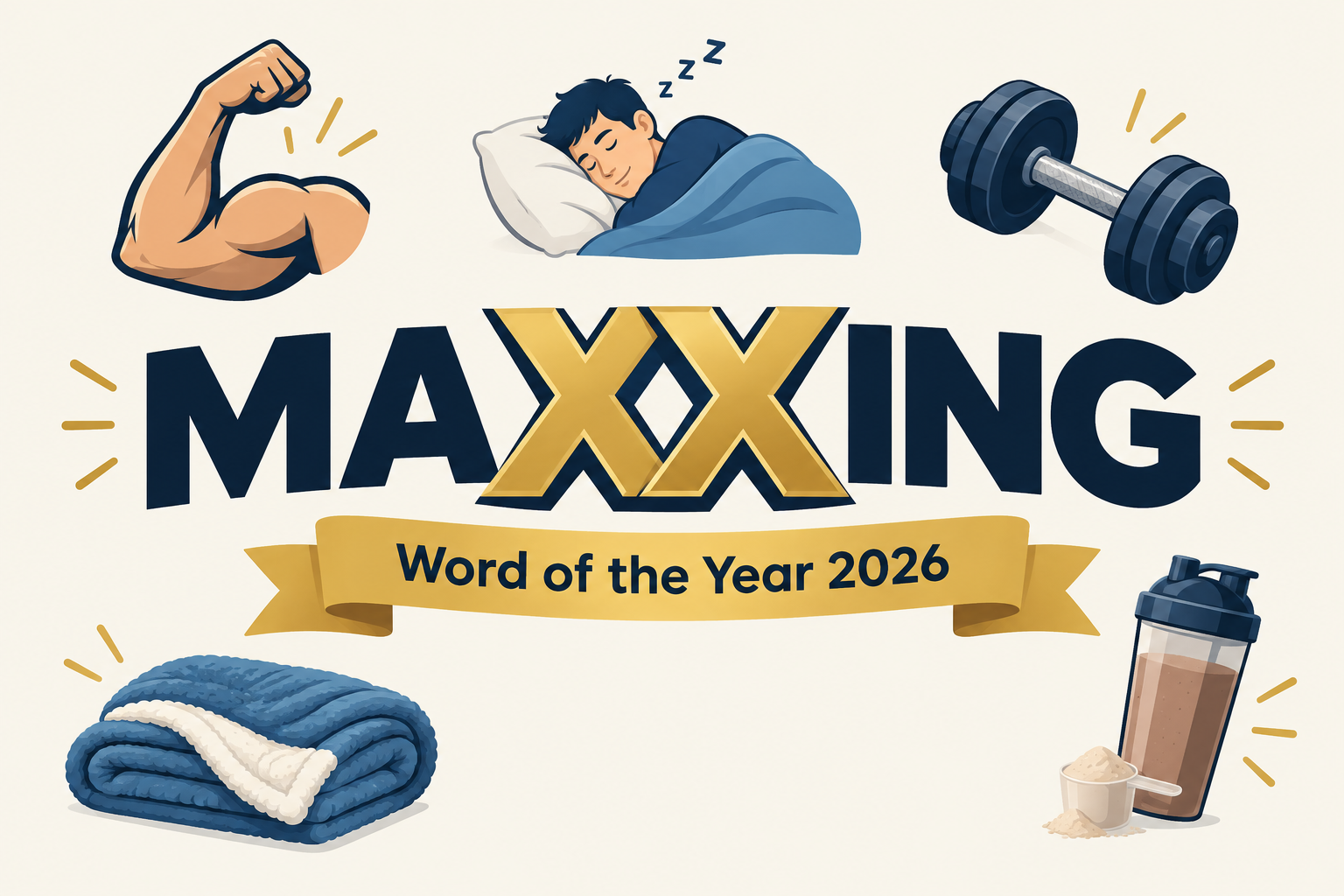
    Dictionary.com has named “maxxing” its 2026 Word of the Year, announcing the pick on Oct. 26, 2026, according to its news release as reported by CBS News and the Spokesman-Review. The word is short for “maximizing,” and it can stand alone or attach to the end of nearly any word to mean doing something to the fullest. If a friend says they are “sleepmaxxing,” they are trying to optimize their sleep as much as humanly possible.

    Word of the YearCONFIRMED (B), Dictionary.com release via CBS News
    Usage spikeCONFIRMED (B), Dictionary.com's own analysis, relayed by PinkNews and KVUE
    Looksmaxxing originCONFIRMED (A), Merriam-Webster places it in mid-2010s incel forums
    Acronym origin storyRUMOR (C), Know Your Meme says "purportedly," citing a fan wiki
    Credit card linkRUMOR (B), Euronews interpretation, not in Dictionary.com's tracing

    What we know

    Dictionary.com, via CBS News, says it picked the word after analyzing search data, social media trends and news stories. It describes “maxxing” as capturing a society that is deeply online and focused on optimization. The dictionary says the term rose quickly through Gen Z and Gen Alpha vocabularies and now works as a noun, verb, adjective and adverb. That is a lot of jobs for one little suffix.

    The numbers are striking, though they come from the publisher itself. According to Dictionary.com’s report as relayed by PinkNews, the term appeared in digital media in August 2026 at almost 19 times the 2025 average monthly rate. “Looksmaxxing” alone rose more than 1,000% in media coverage since the start of the year, according to CBS News.

    Dictionary.com cited a whole family of examples, according to CBS News: “tokenmaxxing” (leaning harder on AI), “sleepmaxxing,” “cozymaxxing,” “gymmaxxing,” and “healthmaxxing,” an umbrella term covering “proteinmaxxing” and “fibermaxxing.” It also cited “homelandmaxxing,” which the federal government used in some messaging.

    On origins, Dictionary.com traces the word to “maximum,” “maximize” and “max,” and links it to the gaming term “min-maxing,” as reported by The National Desk. It says the two-X spelling first appeared on online forums before spreading across social media.

    Merriam-Webster is more specific. Its slang entry says “looksmaxxing” combines “looks” with “maxxing,” and that the extra “x” may be influenced by words like “doxxing.” It says the term originated in the mid-2010s in the online community known as incels. Know Your Meme agrees, dating “looksmaxxing” to 2015 on the incel forum Lookism.net, where a “Looksmaxxing” thread with posts dating to June 29, 2015 was captured by the Internet Archive on July 3, 2015. In those subcultures, it says, the suffix described ways to raise one’s “sexual market value.”

    What is rumored

    Know Your Meme says “looksmaxxing” purportedly began as an acronym tied to the forums PUAHate, SlutHate and Lookism.net. That claim rests on Incel Wiki, a community wiki, and Know Your Meme hedges it. The earliest 4chan /r9k/ use it can verify is Nov. 1, 2015.

    Know Your Meme also says the suffix’s original use is unknown and “plausibly” came from incel communities, with “Comfy-maxxing” on Nov. 20, 2015 as the oldest known 4chan variant. That sets a floor, not a first coinage.

    Euronews connects the word to “maxing out a credit card” as well as gaming. Dictionary.com’s own tracing, as reported, does not mention credit cards, so treat that as the outlet’s reading.

    A Yahoo News summary of ABC News’ “IMPACT x Nightline: LOOKSMAXXED” says mostly male creators popularized the term on TikTok in the early 2020s. That is secondhand reporting of a broadcast.

    What we don’t know yet

    Nobody has pinned down the exact first use of the double-X suffix. The acronym story remains unverified, and the credit card connection is one outlet’s interpretation. Dictionary.com’s growth figures are its own analysis and have not been independently checked.

    What it means

    “Maxxing” is a word that traveled a long way. Merriam-Webster and Know Your Meme place its roots in incel and manosphere forums, communities associated with misogynist and extremist views. No source we reviewed ties it to AAVE, even though plenty of other Gen Z slang does come from there. Merriam-Webster also notes critics discussing looksmaxxing’s harms to young men, including body dysmorphia.

    Today the suffix has mostly shed that narrow meaning. Dictionary.com says people use it seriously, humorously or ironically, sometimes even to mean stepping back from over-optimizing. When a word can describe both protein shakes and blanket forts, it has clearly gone mainstream. It also follows last year’s pick, “67,” announced Oct. 29, 2025, which Dictionary.com admitted it could not fully define. This year’s winner, at least, comes with a clear meaning.