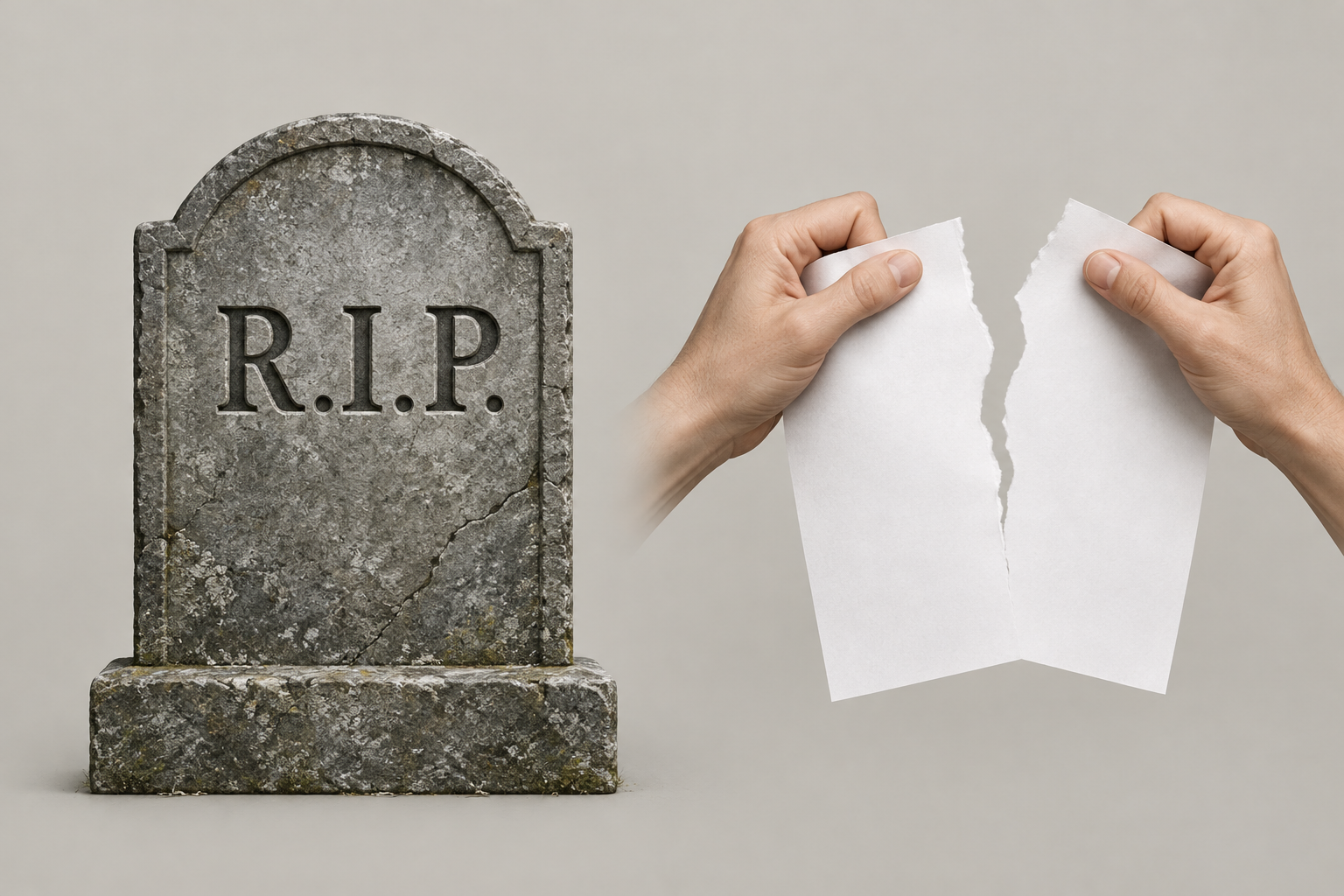
“Rip” is a short English word with a long list of jobs. As a verb (said RIP, /rɪp/) it means to tear something quickly or with force, and it has been in English since about 1400. It also covers slang for stealing (“rip off”), copying a disc to a computer (“rip a CD”) and the online reaction “RIP” for a small letdown. The capital-letter form R.I.P. comes from the Latin requiescat in pace, “may he or she rest in peace.” This page started as a dictionary lookup for “rip” on the old StarDict website. Star Dictionary is a separate words reference and has no connection to the StarDict software project.
The core meaning: to tear
In its plain sense, “rip” means to tear something, or to be torn, quickly and with force. The Oxford Advanced Learner’s Dictionary gives the pronunciation /rɪp/ and the example “she ripped the letter open.” Vocabulary.com describes it as tearing or being torn violently.
Verb uses
The verb works with or without an object, and it takes the forms ripped and ripping.
- With an object: “He ripped the tag off his new jacket.”
- Without an object: “The sail ripped in the storm.”
- Pulling something off or out by force: “The wind ripped the shingles from the roof.”
- Moving fast (informal): “The motorbike ripped down the empty road.”
Noun uses
As a noun, “rip” names the tear itself: “There’s a rip in the knee of your jeans.” Merriam-Webster dates this “rent or tear” sense to 1673. It also lists two other noun senses with their own histories:
| Noun sense | Example | First known use (Merriam-Webster) |
|---|---|---|
| A tear or split | “a rip in the tent” | 1673 |
| A stretch of rough water | “the boat crossed the rip at the harbor mouth” | 1775 |
| A worthless or dissolute person (dated) | “an old rip of a gambler” | 1781 |
The third sense is rare today. You will mostly see it in older novels.
Where the word comes from
The verb “rip” goes back to late Middle English, around 1400. The Online Etymology Dictionary (Etymonline) says it first meant “tear apart, cut open or off.” Its source is uncertain. Etymonline points to a North Sea Germanic origin, comparing Flemish rippen (“strip off roughly”) and Frisian rippe, or a Scandinavian one, comparing Swedish reppa. Merriam-Webster connects Middle English rippen with Middle Dutch words meaning “to pull” or “jerk.”
Neither dictionary settles on one parent word, so treat the Flemish link as likely, not proven. Merriam-Webster’s own pages date the verb to the 14th or 15th century depending on the version, which fits the “about 1400” estimate.
| RIP |
Phrasal verbs and idioms with rip

Most everyday uses of “rip” come in phrases. The ones below are the most common in current English.
| Phrase | Meaning | Example | Register |
|---|---|---|---|
| rip off | to cheat, overcharge or steal from | “That garage ripped us off.” | Informal |
| rip-off (noun) | a swindle, or a cheap copy | “Twelve dollars for popcorn is a rip-off.” | Informal |
| rip up | to tear into pieces | “She ripped up the contract.” | Neutral |
| rip into | to criticize harshly | “The coach ripped into the team at halftime.” | Informal |
| rip apart / rip to shreds | to destroy, or to criticize without mercy | “Critics ripped the sequel to shreds.” | Informal |
| let rip / let it rip | to act or speak with no restraint; to go full speed | “Once the music started, the band let rip.” | Informal |
Rip off: from African American slang to everyday English
“Rip off,” meaning to steal or rob, entered English in the late 1960s. Etymonline dates the verb to about 1967 in African American Vernacular English (AAVE). The noun “rip-off,” for a fraud or swindle, follows in 1969. By 1971 it also meant an exploitative imitation, and later a plagiarism.
The idea was older. Etymonline notes that “rip” alone was prison slang for “to steal” by 1904. Today “rip-off” is ordinary informal English and shows up in reviews, consumer reporting and casual speech.
Rip in computing: ripping a CD or DVD
To “rip” a disc means to copy its audio or video onto a computer or another device as digital files. Dictionaries trace this sense to “rip off.” A program that does the job is called a “ripper,” though most media players now include the feature.
Dictionary.com’s Random House entry labels the sense informal and says it can imply copying without permission or payment. The American Heritage entry on the same site leaves that out. In practice the word is neutral: “She ripped her old CDs to her laptop” describes a method, not a crime. Whether a given copy is legal depends on local copyright law, not the word.
R.I.P. and the slang “rip”
R.I.P. stands for the Latin requiescat in pace, “may he or she rest in peace.” Merriam-Webster notes it is used on tombstones, and Dictionary.com dates its English use to around 1815 to 1825. The plural form is requiescant in pace. In English the letters are often read as the three words “rest in peace.”
“RIP” online for small losses
Online, “RIP” or lowercase “rip” also works as a joking reaction to a minor disappointment. NetLingo describes it as a response to an unfortunate but mild problem, with “big RIP” for something a bit worse. Examples:
- “Spilled coffee on my keyboard. RIP.”
- “rip my phone battery, 2% and no charger.”
- “Oh no, RIP to the car.”
This use is common in gaming chats and group texts. Keep it out of real condolence messages. “RIP” written under news of someone’s death reads as sincere, but the joking tone can easily read as careless, so a full sentence is kinder.
Rip current, rip tide and riptide
A rip current is a narrow, fast channel of water flowing away from a beach. The U.S. National Oceanic and Atmospheric Administration (NOAA) and the National Weather Service state that rip currents are not rip tides. Waves drive rip currents. “Rip tide” properly means a strong tidal current through an inlet or harbor mouth.
NOAA’s science notes say rip currents often form where water rushes back out through a break in a sandbar. They usually run 25 yards wide or less, but they can carry a swimmer hundreds of yards out. In everyday speech many people say “riptide” when they mean a rip current. Forecasters and lifeguards use “rip current.”
Synonyms and related words
The best synonym depends on the sense.
- Tear: tear, rend, split, slit, shred
- Steal or overcharge: cheat, swindle, fleece, gouge, con
- Criticize: slam, pan, blast, savage
- Move fast: tear, zoom, race
Related words built on the same root include ripper, ripping (dated British slang for “excellent,” as in “a ripping yarn”), ripped (informal for very muscular) and rip cord, the cord pulled to open a parachute.
About the old StarDict lookup page
This address once hosted the website of StarDict, a free, open-source dictionary program. The footer of this lookup page read “©2006 StarDict.” That notice belonged to the program’s developers, and its menu items, such as Help, pointed to their own pages. The old site also carried a banner asking “Looking for chinese translators?” That request was part of the old site and is no longer open here.
StarDict is still developed by its own team, led by Hu Zheng, on its own project pages and code repositories. Wikipedia lists version 3.0.7.1 from October 2023 as the latest stable release. If you came here looking for a “Download StarDict” button, this site does not host the program or any dictionary files. Some old dictionary files passed around online were unlicensed copies of commercial dictionaries. For licensed definitions you can look up the established dictionaries directly: Merriam-Webster, the Oxford dictionaries and Cambridge all publish free online entries.
FAQ
What does “rip” mean in slang?
It depends on the phrase. “Rip someone off” means to cheat or overcharge them, a use that began in African American slang in the late 1960s. Online, “rip” or “RIP” on its own is a mock-sad reaction to a small setback, such as “my phone died, rip.”
What does R.I.P. stand for?
R.I.P. is short for the Latin requiescat in pace, “may he or she rest in peace.” It appears on gravestones and in condolence messages. In English most people read it as “rest in peace.”
Is “rip-off” one word, two words or hyphenated?
The verb is two words: “They ripped me off.” The noun is usually hyphenated, “a rip-off,” though “ripoff” as one word is also common, especially in American English. Check your style guide if you write for a publication.
Is “riptide” the same as a rip current?
Not technically. NOAA says rip currents are not rip tides: rip currents are driven by waves near beaches, while rip tides are tidal currents through inlets and harbor mouths. In casual speech “riptide” is widely used for both, but safety warnings use “rip current.”
Is ripping a CD illegal?
The word itself only describes extracting digital content, whether from a disc such as a CD or DVD or from a streaming service or other digital source. Whether a particular copy is allowed depends on the copyright law where you live and on what you do with the files. Some dictionaries note the informal sense can suggest unauthorized copying, but many people use it neutrally.
Where does the word “rip” come from?
It entered English around 1400, possibly from a North Sea Germanic source related to Flemish rippen (“strip off roughly”) or a Scandinavian word such as Swedish reppa. Etymologists have not settled on one parent word. Rather than learning one “true” origin, remember that it belongs to a family of Germanic words about pulling and tearing.
Sources
- Merriam-Webster: rip
- Merriam-Webster: requiescat in pace
- Oxford Learner’s Dictionaries: rip
- Online Etymology Dictionary: rip
- Online Etymology Dictionary: rip-off
- Dictionary.com: rip
- NOAA rip current glossary (archived)
- Wikipedia: StarDict
About this article
- Fact-checked before publication.
- Published · Updated