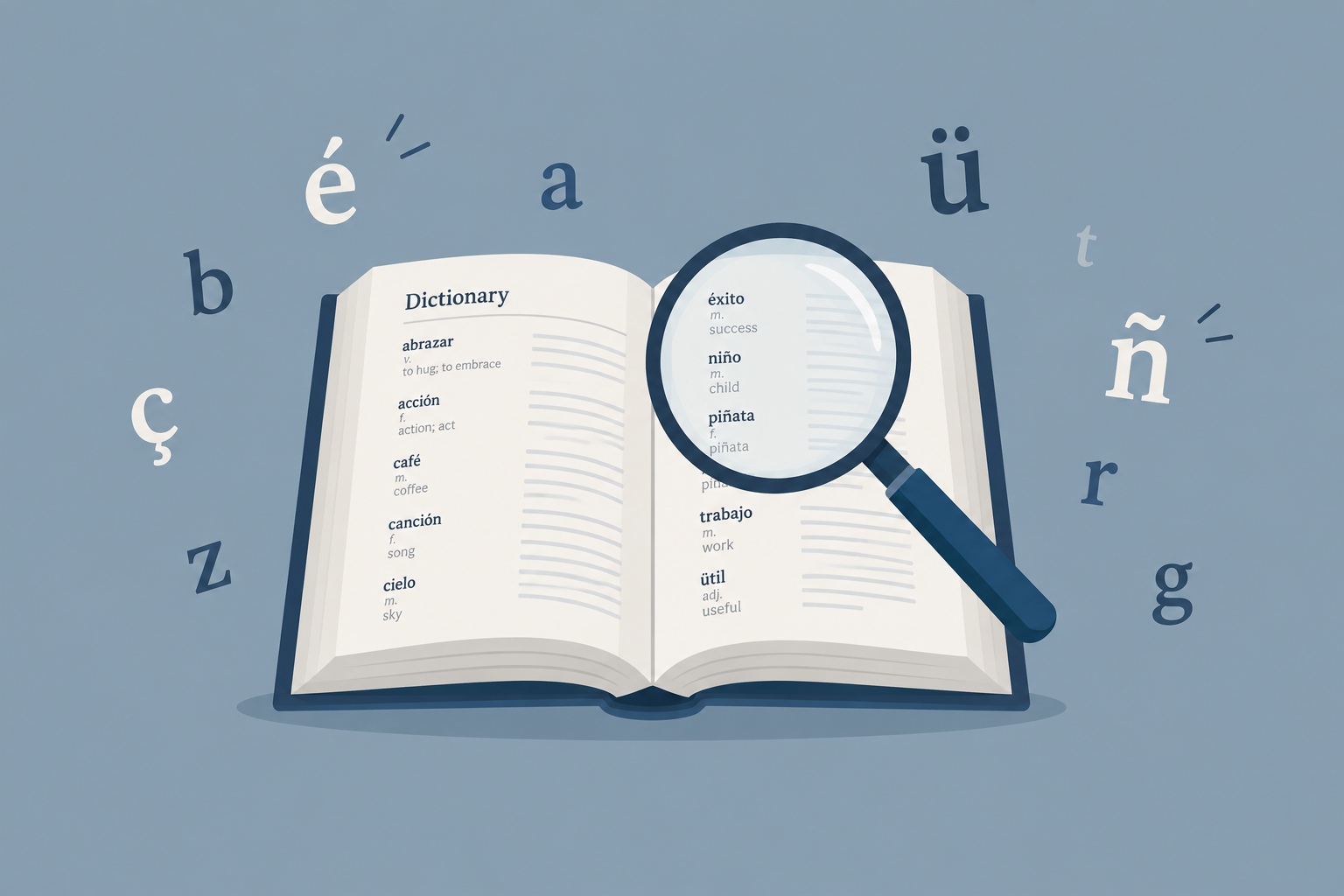
StarDict is a free, open-source dictionary program for computers. Its original author, Hu Zheng, still develops it, but not here: this site, Star Dictionary, is an independent reference for word meanings, origins, idioms and translations, and has no connection to the StarDict project. The last release is version 3.0.7, nicknamed “MasterWork,” from October 2023. The project’s official information is on its SourceForge site (the stardict-4 project) and in its GitHub repository. Today, StarDict-format dictionaries also work in other programs such as GoldenDict and the e-reader app KOReader, and FreeDict publishes openly licensed dictionaries in the format.
Old StarDict.org frequently asked questions
The two answers below come from the time when this address was the StarDict program’s website, which lasted until about 2013. They have been rewritten in plain English and corrected where needed. They describe how the program and the old site worked, not anything this site offers.
,
What does the collate function do?
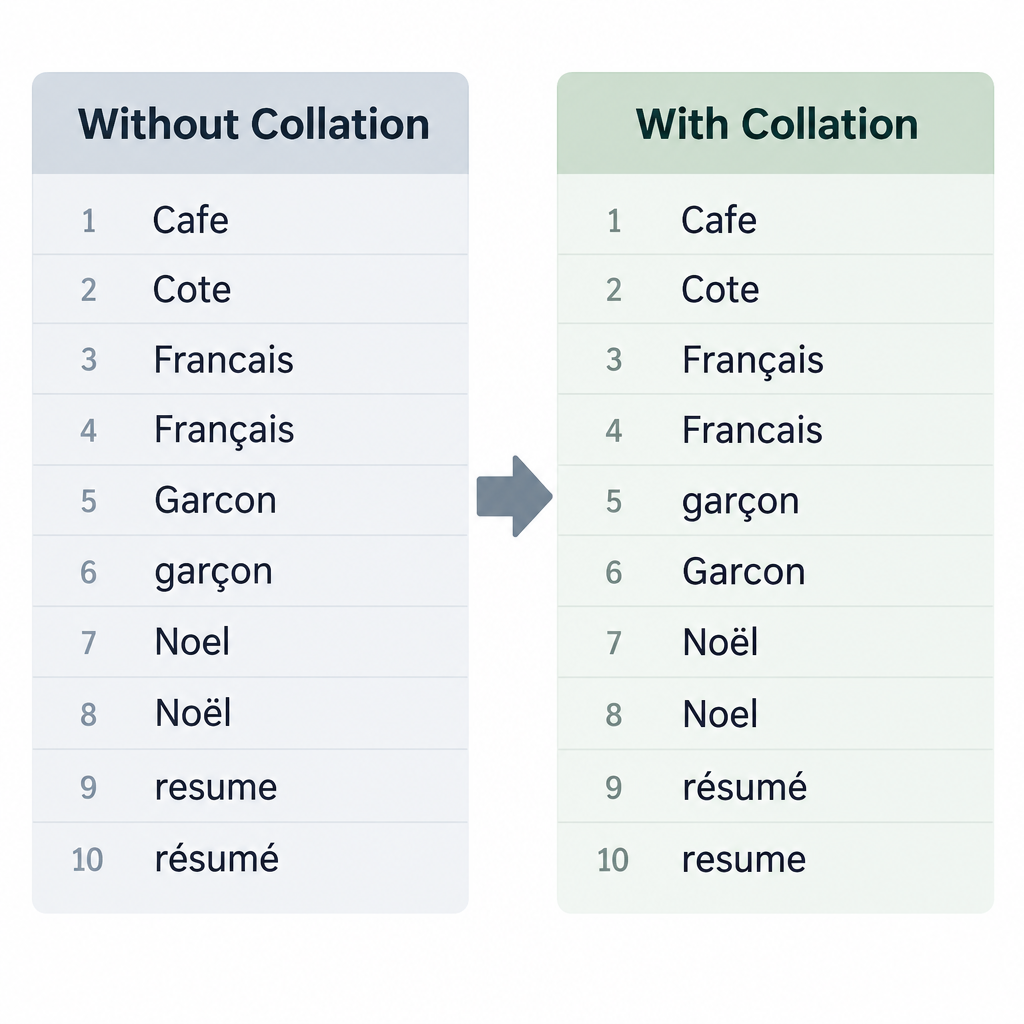
The collate function sorts a dictionary’s word list using the alphabet rules of a particular language, not just the basic English (ASCII) order. Without it, StarDict sorts words by comparing ASCII letters without regard to case. Letters with accents, like “ç,” then end up in places a speaker of that language would not expect.
This matters because when the exact word you type is not in the dictionary, StarDict shows the closest word that comes after it in the list. With collation turned on, those near matches are better. For example, typing “Francais” without the cedilla can find “Français.”
Some details from the project’s own documentation:
- Collation support arrived in StarDict 2.4.8.
- In the program, you choose a collation function in the Preferences dialog under Dictionary, then Cache.
- After you change the collation function, the dictionary has to be reloaded.
- StarDict saves the sorted order in cache files with the extensions.idx.clt and.syn.clt, so it does not have to sort the list again on every start.
Collation helps most with languages whose alphabets go beyond plain A to Z. One user with Romanian word lists noted that without it, the program cannot sort words in Romanian alphabetical order.
How could users upgrade their account level? (history)?
This answer is history only. The old StarDict.org site offered account levels, and users could upgrade theirs by paying through a section of the site called the Finance Center. Users could also earn an upgrade by contributing to the project. Examples included accepting the site’s invitation to “help us translate” the website, adding more dictionaries, or joining StarDict development.
That account system closed with the old site. Accounts, payments and account levels do not exist at this address today. Anyone who wants to contribute to StarDict now does so through the project’s own channels, such as its GitHub repository and issue tracker.
Help with the StarDict program today
StarDict’s developers keep the official documentation and source code on SourceForge and GitHub. The program runs on Linux, FreeBSD, Solaris and Windows. Version 3.0.7 moved it to GTK3, and its 2023 to 2024 changelog shows that the license briefly changed to public domain before going back to GPLv3.
The dictionary format is just as important as the program. A StarDict dictionary is a set of files that share one base name:
| File | What it holds | Notes |
|---|---|---|
| .ifo | Basic information about the dictionary | Plain text; the version field is “2.4.2” or “3.0.0” |
| .idx or.idx.gz | The sorted word list, with the position of each entry | If the word list is in the wrong order, StarDict will not work properly |
| .dict or.dict.dz | The definitions themselves | .dz files use dictzip, a form of gzip that allows jumping to any point in the file |
| .syn (optional) | Synonyms that point to entries in the index | Gets its own.syn.clt cache when collation is on |
Text in these files must be UTF-8, and numbers are stored in network byte order. Because the format is well documented, GoldenDict, KOReader and many smaller apps and code libraries can read it.
One warning applies. In the past, some StarDict-format dictionaries passed around online were unlicensed copies of commercial dictionaries. If you want dictionary files for a reader app, choose openly licensed sources such as FreeDict, or use the official Merriam-Webster, Oxford and Cambridge dictionaries through their own websites and apps.
FAQ
Is this site the official StarDict website?
No. Star Dictionary is an independent reference for words and language, run by new owners who have no link to the StarDict project. The program is still developed by Hu Zheng and other contributors, and its official pages are on SourceForge and GitHub.
Is StarDict still being developed?
Yes, though updates are slow. Version 3.0.7 “MasterWork” came out on 3 October 2023 according to the project’s changelog, and a follow-up revision in January 2024 changed the license back to GPLv3. Linux distributions such as Debian still ship StarDict packages built from the 3.0.7 code.
What is a collation file in StarDict?
A collation file is a cache that stores a dictionary’s word list sorted by the rules of a particular language. StarDict creates it as an.idx.clt file, plus a.syn.clt file if the dictionary has synonyms. If you switch the collation function, the dictionary has to be reloaded before the new order takes effect.
Which programs can open StarDict dictionaries?
StarDict can, of course, and so can GoldenDict on the desktop and KOReader on e-readers and phones. FreeDict lists StarDict as one of its main download formats because so many devices support it. Code libraries in Go, Rust, Haskell and JavaScript can read the files too.
Can I still use my old StarDict.org account?
No. The account levels, the Finance Center and contributor upgrades were all part of the program’s old website, which closed around 2013. This site has no user accounts from that period and cannot recover them.
Are all StarDict dictionary files legal to use?
No. The format itself is open, but some files shared online in the past were copied from commercial dictionaries without permission. Openly licensed collections such as FreeDict, or the publishers’ own products, are the safe choice.
Sources
- StarDict official site (stardict-4 project on SourceForge), English index page
- StarDict File Format documentation (stardict-4.sourceforge.net)
- StarDict 3.0.7 ChangeLog (Hu Zheng’s source repository mirror on GitCode)
- StarDict source code, stddict.h (collation modes)
- StarDict, Wikipedia
- FreeDict downloads page
- GoldenDict package description, Fedora Packages
- Debian/PureOS stardict package listing (3.0.7)
About this article
- Fact-checked before publication.
- Published · Updated